
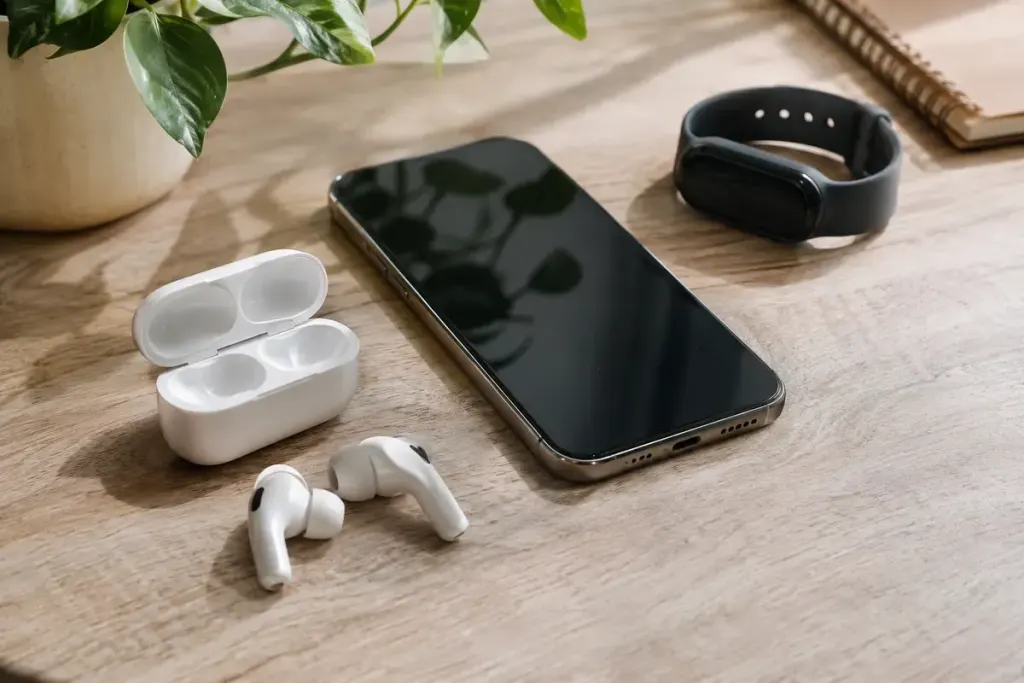
A Bluetooth device may appear under a different radio address on a later scan even though you have not replaced it. Bluetooth Low Energy supports private addressing to make a fixed address less useful for tracking. That does not mean the device has lost its identity to every other device.
The Bluetooth SIG security and privacy guide distinguishes private-address approaches. A resolvable private address can change while a trusted peer holding the appropriate identity resolving key can recognise the device. That is different from simply assigning one random-looking address and leaving it unchanged.
Separate an address from a relationship
Think of two different questions: what identifier is visible in this radio exchange, and which device does an already established relationship refer to? Private addressing can change the first without requiring you to rebuild the second each time.
The Bluetooth LE primer explains the address types in more detail. Implementations and application choices matter, so not every accessory behaves identically.
What this means when troubleshooting
If you keep a list of devices, do not assume that one changed address proves a new physical device has appeared. Likewise, a familiar display name is not a strong identity guarantee on its own. Use the operating system’s supported device-management and pairing process rather than trying to identify an accessory from one field in a scanner.
For example, when replacing earbuds, remove the old pairing through the normal settings and follow the new product’s instructions. Do not keep guessing from a sequence of similar names and changing addresses if the manufacturer’s setup process provides a clearer route.
Address privacy is also narrower than complete anonymity. Other transmitted data, application behaviour and account activity can affect privacy. Turning on a privacy feature does not make all surrounding information disappear.
The useful takeaway is modest: a rotating address can be deliberate, and a retained connection can still be legitimate. Read the device’s supported behaviour before treating either observation as evidence of a fault or a privacy guarantee.