
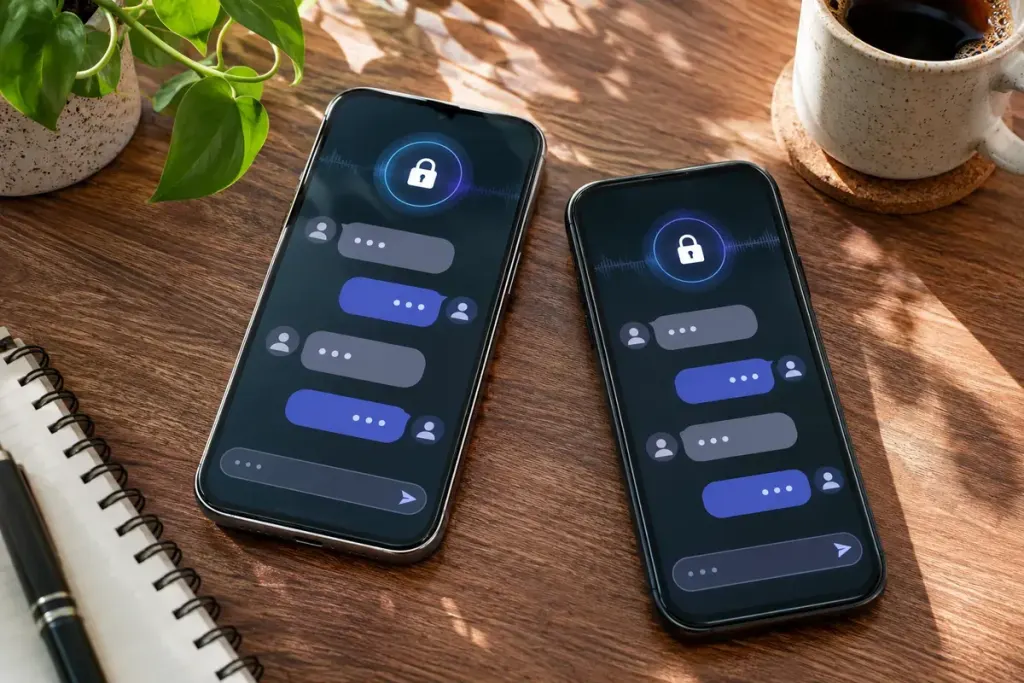
An encrypted conversation still depends on using the right keys for the intended contact. Key transparency adds a way to check that the service is presenting a consistent association between an account identifier and encryption keys.
Signal’s automatic key verification guide describes a check based on key transparency that sits alongside safety numbers. Where the feature is available and succeeds, the app can show that encryption has been verified. Availability depends on conditions described by Signal, including whether it has the contact’s phone number.
Keep identity and encryption separate
A successful key check does not prove that the person behind the account is your colleague, bank or family member. Someone can impersonate a name or send a misleading message through an encrypted channel. An account can also be compromised in ways this check does not prevent.
For an illustrative example, a message from a familiar-looking profile asks you to change a payment destination. The presence of an encryption indicator is not sufficient reason to make that change. Confirm the request through a trusted, established process that does not depend on the suspicious message.
Likewise, a missing or changed verification status is not by itself proof that a conversation has been intercepted. Read the app’s explanation and check the contact details before drawing a conclusion.
Use the check in a sensible routine
Open the contact’s safety-number view through the app’s normal interface and follow its current instructions. For higher-consequence conversations, manual comparison through another trusted channel or in person can remain useful.
Keep the app updated and protect the device and account as well. Do not share private keys, registration codes or recovery information with someone claiming they need them to “repair” verification.
The practical benefit is an additional check on the cryptographic connection. It is strongest when understood as one layer of assurance, alongside verifying who you are speaking to and evaluating what they are asking you to do.