
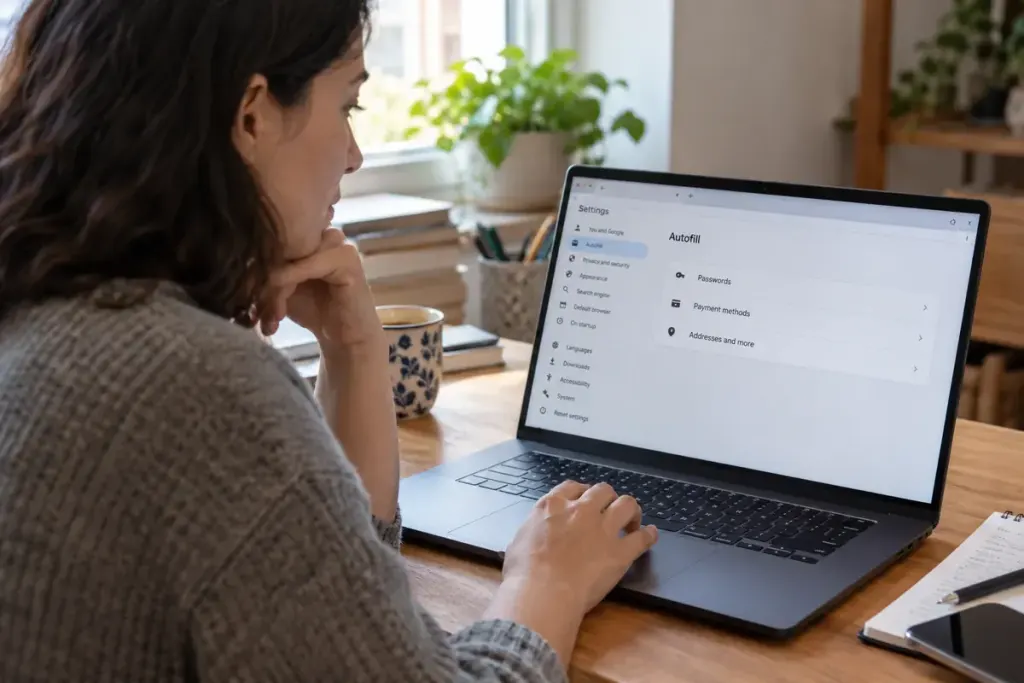
Lending someone a laptop to print a ticket can reveal more than the open tab. Clicking an address field may offer your home address, while a checkout page may suggest saved payment information. The exposure can happen without anyone deliberately searching through settings.
Before handing over a device, consider which browser profile will be available. Closing a shopping tab does not remove the profile’s saved data, and turning off one type of autofill does not necessarily affect every other saved field.
Choose the right separation
On supported desktop Chrome installations, Google’s Guest mode guidance explains that a guest cannot see or change information in other Chrome profiles. Guest browsing is useful for a short loan, but it is not a complete security boundary against the device owner or access to the rest of the computer.
For repeated sharing, a separate operating-system account may be more appropriate. Follow the device’s account controls and keep private files outside shared locations. Incognito browsing alone should not be treated as a way to make your entire device private from someone using it.
Check the ordinary places information appears
Review saved addresses, payment entries and password-manager access in the profile you normally use. Remove obsolete information deliberately, checking whether a change also synchronises to your other devices. Do not delete useful account data in a hurry without understanding that effect.
Close private documents, messaging windows and notification previews before the loan. Ask the borrower to avoid saving credentials, and agree where any downloaded file will be placed. Afterward, close the guest session and check for files that remain on the device.
A short handover checklist can be simple: correct account, appropriate browser session, private windows closed, downloads agreed. It reduces accidental disclosure without expecting either person to inspect every field on every website.
The goal is a predictable borrowing session. Autofill is convenient when it serves the right person; account separation helps keep that convenience attached to its owner.