
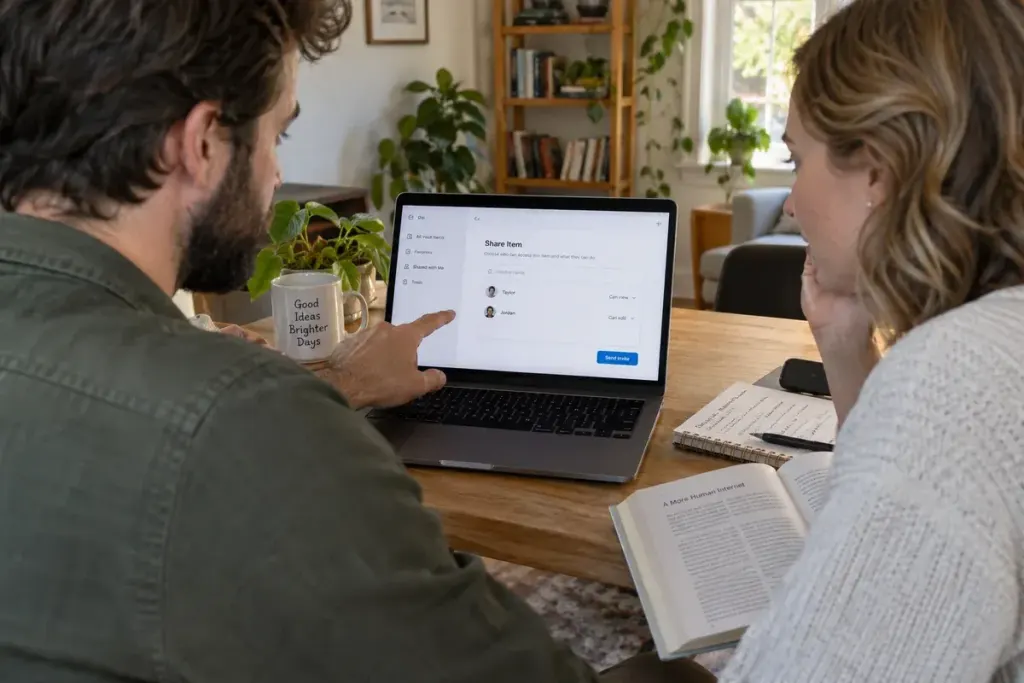
A household password often starts in a message: “Here is the login.” Months later, nobody remembers which email address receives the reset link, who changed the password or whether a departing housemate still has access. The secret was shared; responsibility was not.
First check whether the service offers separate user profiles or individual authorised accounts. That can make access easier to remove and activity easier to understand. Sharing credentials should not override a service’s rules or expose an account that belongs personally to someone else.
Separate access from ownership
For an account that legitimately needs shared access, record who owns it, who can use it and who controls recovery. A password manager with a shared collection can help distribute credentials without repeatedly copying them into chat. Bitwarden’s family product information provides one example of this type of sharing; available features and limits should be checked before choosing a plan.
A shared vault does not automatically solve recovery. If the only owner loses their phone or email account, the household may still be locked out. Review the service’s supported recovery methods, keep recovery material in an appropriate secure location and agree who is authorised to use it. Do not store a manager’s master password beside a casually accessible list of account details.
Try the ordinary change scenarios
- Someone replaces a phone and needs to restore their access.
- A member leaves the household and should lose permission.
- The payment owner changes but the service continues.
- A suspicious login requires everyone to stop using the old credential.
For each scenario, identify the person who can act and the place where the necessary instructions are kept. Avoid storing more sensitive information than the task needs. A short ownership note can be sufficient without building a document full of secrets.
When someone leaves, remove their access through the manager and the service, review active sessions and change shared credentials when appropriate. Removing a person from a vault does not erase a password they previously saw or copied.
The aim is a small, understandable system that survives normal household changes. Being able to log in today is only half the problem; knowing who can recover or revoke access tomorrow is the other half.